


30 Jun Kezar Makes a Solid Comeback!
Kezar Life Sciences, Inc. (NASDAQ: KZR), a clinical-stage biotechnology company, reported positive top-line results from the Phase 2 clinical trial named MISSION, evaluating zetomipzomib, a novel, first-in-class selective immunoproteasome inhibitor, in patients with active lupus nephritis (LN).
The MISSION Phase 2 trial is an open-label study with 21 patients, of which 17 patients reached the end of treatment. Furthermore, 11 of 17 patients (64.7%) achieved an ORR measured as a 50% or greater reduction in UPCR at EOT compared to baseline, the primary efficacy endpoint of the clinical trial. 6 of 17 patients (35.2%) achieved a CRR of 0.5 UPCR or less, 16 of 17 patients (94.1%) reached an ORR at Week 29, and 6 patients maintained a CRR. The candidate was well tolerated over the course of the treatment period with common treatment-emergent adverse events such as injection site reaction, pyrexia (fever), headache, or nausea with or without vomiting. Two patients experienced serious adverse events in the study and in total early terminations occurred in 4 out of 21 patients.
Kezar Life Sciences, Inc. (NASDAQ: KZR)
Market Cap: $479.10M; Current Share Price: 7.93 USD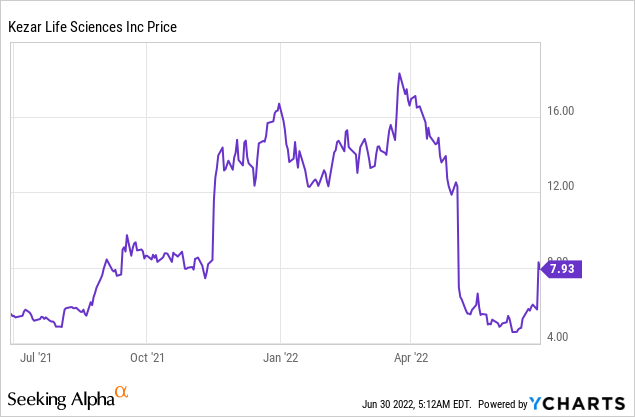
Data by YCharts
Noreen R. Henig, M.D., Kezar’s Chief Medical Officer, commented,
“The MISSION Phase 2 topline results show a clinically meaningful overall renal response to zetomipzomib after 6 months, without high-dose induction therapy. Patients in the trial also experienced reductions in extra-renal manifestations of lupus. Zetomipzomib appears to be immunomodulatory, well-tolerated and steroid-sparing – all important attributes for patients with autoimmune disease who are often young and active. Based on the strength of these results, we plan to continue developing zetomipzomib for patients with lupus nephritis, as well as evaluate development opportunities for systemic lupus erythematosus”.
The primary efficacy endpoint was the proportion of patients achieving an overall renal response (ORR) with a 50% or greater reduction in urine protein to creatinine ratio (UPCR) at EOT. The secondary endpoint was the number of patients with a complete renal response (CRR), measured as an absolute reduction in proteinuria values to a UPCR of 0.5 or less, with preserved renal function (eGFR), and corticosteroid use of 10 mg or less prednisone/prednisone equivalent and no use of prohibited medication.
Zetomipzomib (KZR-616) is a first-in-class, selective immunoproteasome inhibitor that is being developed to treat multiple autoimmune diseases. The candidate has demonstrated elective immunoproteasome inhibition results in animal models of several autoimmune diseases in preclinical testing.
Strength
Kezar is developing a pipeline of novel protein-targeting approaches that seek to overcome the limitations of current treatment options. The Company is leveraging its scientific expertise to develop first-in-class small molecules for targeting select proteins that regulate cellular function. The Company’s approach involves selective immunoproteasome inhibition, which is expressed in immune effector cells and plays a critical role in the regulation of the immune system and cellular homeostasis.
Zetomipzomib (KZR-616) is a selective immunoproteasome inhibitor that is being developed to treat a range of autoimmune diseases. The candidate offers a “pipeline in a drug” approach, for its wide applicability in the treatment of a broad range of autoimmune conditions and has the potential to be a steroid-sparing agent that can modulate the immune system when it is dysregulated. Zetomipzomib offers several improvements over existing treatment options such as complications due to prolonged treatment like osteoporosis, muscle weakness, infections, bone marrow suppression, and hepatoxicity. Besides Lupus Nephritis, the candidate is also being evaluated in a phase 2 trial in Dermatomyositis (DM) Polymyositis (PM) and the Company reported the topline data from the PRESIDIO Phase 2 clinical trial of zetomipzomib in May 2022. Though the candidate showed meaningful improvements in total improvement score (TIS), it failed to demonstrate significant differentiation from placebo.

Image Source: Company
In addition, the Company’s Protein Secretion Inhibition Platform is an in-house drug discovery engine that is being utilized to develop first-in-class small molecule therapeutics that block proteins responsible for dysfunction in diseases spanning oncology, immuno-oncology, and autoimmunity. KZR-261 is the first multi-protein secretion inhibitor developed using the platform that elicits a broad anti-tumor immune response through inhibition of multiple secreted/ membrane proteins. The candidate inhibits Sec61 translocon, found at the beginning of the protein secretion pathway, which was previously deemed undruggable. The Company’s Investigational New Drug (IND) application was accepted by the FDA in Q3,2021 and Kezar has initiated a Phase 1 clinical trial in advanced/metastatic solid tumors.
Weakness
Kezar faced a setback earlier this year as top-line results from a Phase 2 study showed that the candidate failed to beat a placebo in a trial evaluating zetomipzomib as a treatment for dermatomyositis or polymyositis. The trial enrolled 25 patients, who received zetomipzomib or placebo subcutaneously weekly for 16 weeks and then switched to the other arm for another 16 weeks. While the zetomipzomib arm recorded a mean change of 25.5 on a composite score that measured parameters such as muscle strength, the placebo arm scored 25. At the end of week 32, the changes in the zetomipzomib and placebo arms were 32.5 and 31.3, respectively.
The failure of the candidate raised questions about the rest of the pipeline. However, the favorable safety profile and lack of safety red flags made the Company hopeful of positive results in the MISSION trial in lupus nephritis. The positive top-line results are a shot in the arm of the Company.
Opportunity
Systemic lupus erythematosus (SLE) is an autoimmune disease that causes the body’s immune system to attack healthy tissue causing inflammation, photosensitivity, oral ulcers, pleuritis, joint pain, arthritis, fever, and a butterfly rash. In the long run, it can also affect the kidneys, brain, and heart. The disease is asymptomatic and has no identified cause or cure. The current treatment options aim to alleviate the symptoms and improve the quality of life of those affected and include using glucocorticoids, antimalarial agents, topical steroids, and NSAIDs for pain management.
It takes an average of 6 years from developing the symptoms of Lupus to being diagnosed, according to data made available by the lupus foundation of America. This chronic condition which affects an estimated 1.5 million people in America each year, costs over $21,000 in annual financial costs. Another report by the Centres for Disease Control and Prevention estimates that 16,000 new diagnoses of Lupus are made each year.
Lupus Nephritis is a complication of SLE, in which the lupus antibodies damage the structures in the kidneys, causing inflammation and loss of protein, blood in urine, high blood pressure, and eventual kidney failure if left untreated. Timely diagnosis and routine urine analysis to look for protein, blood, and cellular casts can ensure the proper treatment. There are five different types of lupus nephritis based on the size of the complexes and their location and treatment, usually according to the type.
According to a report by Delve Insight, the lupus nephritis treatment market in the united states accounted for USD 975.1 million in 2021, while the lupus treatment market is set to reach USD 3.08 billion by 2025, growing at a CAGR of 7% according to another report by Grand View Research. The development of new therapies ranging from biologics and JAK inhibitors to stem cell transplantation will be a crucial driver of growth in the market. The prohibitive cost of treatment and the lack of insurance coverage might act as hurdles to growth.
Threat
The Company is pursuing a “pipeline in a drug” opportunity and a single candidate is being evaluated in diverse indications. The other symptoms that the candidate is being assessed are either in the Phase 2 trial stage or undergoing preclinical development. Clinical Trials are fraught with risk and uncertainty. There is a possibility that the candidates in the Company’s developmental pipeline may not be able to meet their clinical endpoints in trials.
The Company may fail to receive regulatory approval for any other candidates, resulting in a setback for the other candidates in the pipeline.
However, a diverse pipeline will help mitigate the risk in case of adverse results or the failure to meet endpoints in any of its ongoing trials. The success of its clinical trials will allow the Company to advance its pipeline, but it should also be prepared to face any setbacks in case its ongoing attempts fail to meet its endpoints.
Key Takeaways
Disclosure: I/we have no positions in any stocks mentioned, and no plans to initiate any positions within the next 72 hours.
Click here to please visit our detailed disclosure
References
https://www.grandviewresearch.com/press-release/global-systemic-lupus-erythematosus-sle-market
https://www.kezarlifesciences.com/science/protein-secretion-inhibition
https://ir.kezarlifesciences.com/static-files/2d92aded-c116-4951-9f8c-9004a43ab7a3

No Comments